|
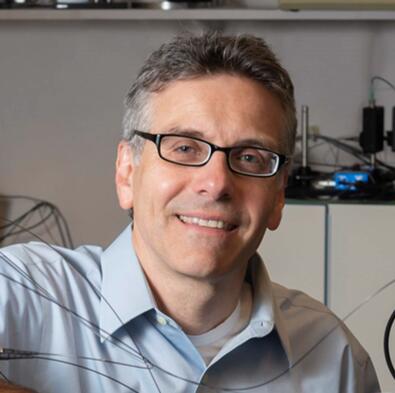
Thomas L. Schwarz, Ph.D.
Professor of Neurology and Neurobiology in the Department of Neurology
Children's Hospital
Neuroscience, Enders 208
300 Longwood Ave
Boston, MA 02115
Telephone: 617-355-2705
Fax: 617- 738-1542
Email: thomas.schwarz@tch.harvard.edu
|
 |
The research interests of the Schwarz Lab include 1) the mechanism of secretion of neurotransmitters at synapses; 2) trafficking of membrane proteins and exocytosis; 3) axonal transport of organelles, particularly mitochondria, by kinesins; and 4) the development of synapses. Our primary experimental organism is Drosophila melanogaster and we therefore approach each of these questions through a combination of genetics, biochemistry, electrophysiology, cell biology, and microscopy.
Our interests thus center on the intersection of fundamental cell biology with the functioning of neurons in particular. How do membranes fuse? How do motors control the distribution of organelles? The neuron, because of its extraordinarily complex structure and highly regulated mode of exocytosis, offers special challenges to general cell biological processes. For example, every cell needs to regulate the number of mitochondria they contain and their distribution within the cell, but in neurons this task is particularly complex because axons may extend over a meter in length from the cell soma and because different regions of the neuron can have very different energetic demands. Similarly, while every cell has membrane traffic within the cell and exocytosis at its surface, the neuron needs to regulate the release of neurotransmitter with sub-millisecond timing and with precise control of the number of vesicles to fuse. Therefore, we move back and forth from neurons to non-neuronal cells to understand the fundamental processes of membrane traffic and their specializations in neurons. Recent projects have also caused us to examine the manner in which signals are communicated from the synapse to the nucleus and the cell biology and signaling events that are required to form a presynaptic nerve terminal.
|
References:
-
Dickman, D.K, Horne, J.A., Meinertzhagen, I.A., and Schwarz, T.L. (2005) A slowed classical pathway rather than kiss-and-run mediates endocytosis at synapses lacking synaptojanin and endophilin. Cell 123:521-533.
-
Glater, E.G., Megeath, L.J., Stowers, R.S., and Schwarz, T.L. (2006) Axonal Transport of Mitochondria Requires Milton to Recruit Kinesin Heavy Chain and is Light Chain Independent. J. Cell Biol. 173:545-557.
-
Pack-Chung, E., Kurshan, P.T., Dickman, D.K., and Schwarz, T.L. (2007) Immaculate Connections, a Drosophila Kinesin, is Required for Synaptic Bouton Formation and Synaptic Vesicle Transport. Nature Neuroscience. In press
|
|