DMS Home  /  About DMS  /  Current Student Resources  /  Contact Us  /  Search 

Alexander Schier, Ph.D.

Harvard University
Dept. of Molecular & Cellular Biology
16 Divinity Avenue, BL1027
Cambridge, MA 02138
Telephone: 617-496-4835
Fax: 617-495-9300
Email: schier@fas.harvard.edu
Predocs: 5 Postdocs: 8 Completed PhD's: 7


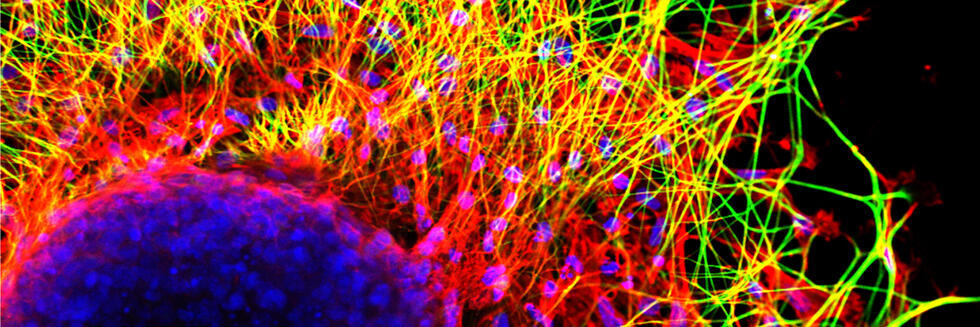
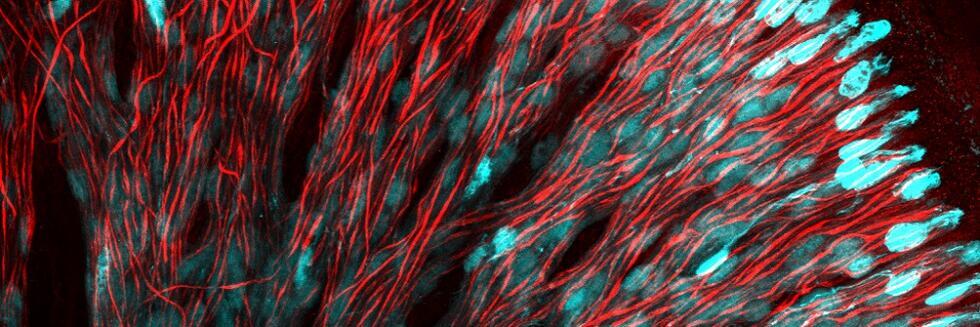
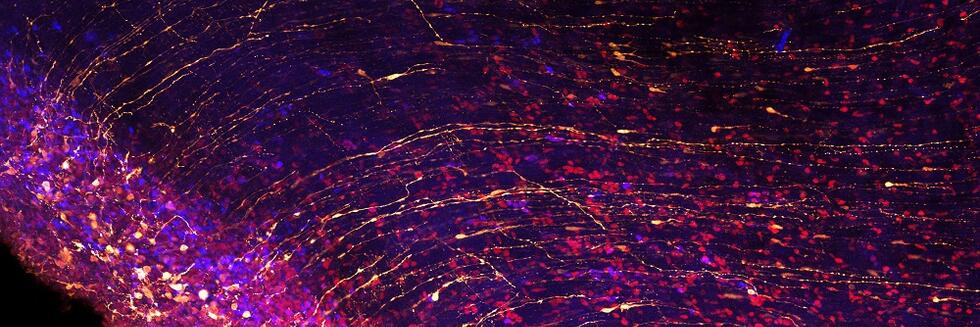
Our neurobiological research focuses on two areas in neurobiology: 1) sensory neuron development and function - how does an organism sense potentially harmful stimuli? 2) sleep and wakefulness - what are the genes and circuits that regulate sleep? We mainly use zebrafish as a model system, because genetic and imaging approaches can be combined to study complex behaviors and developmental processes.

Sensory neuron development and function

Animals protect themselves by sensing potentially harmful thermal, mechanical or chemical stimuli. This process of nociception is mediated by specific sensory receptors and circuits. We analyze the development of trigeminal sensory neurons, the primary nociceptors in the vertebrate head. Our studies revealed that chemokine signals assemble trigeminal sensory neurons into a nerve center (ganglion) and that mutual repulsion limits the size of sensory arbors. These results provide a model for how sensory neurons assemble and generate complex innervation patterns. We are now studying which molecules mediate these interactions.

Sleep and wakefulness

The genetic and cellular mechanisms that control sleep and wake states remain largely elusive. We are establishing zebrafish as a model system for sleep research. Zebrafish have the basic hallmarks of sleep-like behaviors. Sleeping fish require stronger stimuli than awake fish to initiate movement and sleep deprivation is followed by increased sleep. In addition, the zebrafish brain expresses peptides that have been implicated in human sleep disorders. We are developing assays to measure sleep and wakefulness in zebrafish with the long-term goal of using genetic screens to isolate novel sleep regulators.


References:

  • Knaut, H., Blader, P., Straehle, U., and Schier, A.F. (2005). Assembly of trigeminal sensory ganglia by chemokine signaling. Neuron 47, 653-666.
  • Ciruna, B., Jenny, A., Lee, D., Mlodzik, M. and Schier, A.F. (2006). Planar cell polarity signalling couples cell division and morphogenesis during neurulation. Nature 439, 220-224.
  • Giraldez, A.J., Mishima, Y., Rihel, J., Grocock, R.J., Van Dongen, S., Inoue, K., Enright, A.J. and Schier, A.F. (2006).Zebrafish miR-430 promotes deadenylation and clearance of maternal mRNAs. Science 312, 75-79.
  • Prober, D.A., Rihel, J., Onah, A.A., Sung, R.-J., and Schier, A.F. (2006). Hypocretin/Orexin Overexpression Induces An Insomnia-Like Phenotype in Zebrafish. Journal of Neuroscience 26, 13400-10.
  • Choi, W.-Y., Giraldez, A.J. and Schier, A.F. (2007). Target Protectors reveal dampening and balancing of Nodal agonist and antagonist by miR-430. Science 318, 271-274.