DMS Home  /  About DMS  /  Current Student Resources  /  Contact Us  /  Search 


Related Links

Elizabeth Engle, M.D.

Professor of Neurology and Ophthalmology
Investigator, Howard Hughes Medical Institute

Visiting Address:

Children's Hospital
Center for Life Science Building
Room 14075
3 Blackfan Circle
Boston, MA 02115

Mailing Address:

CLS14075
300 Longwood Avenue
Boston, MA 02115


Telephone: 617-919-4030
Fax: 617-919-2769
Email: elizabeth.engle@childrens.harvard.edu
Website: The Engle Lab


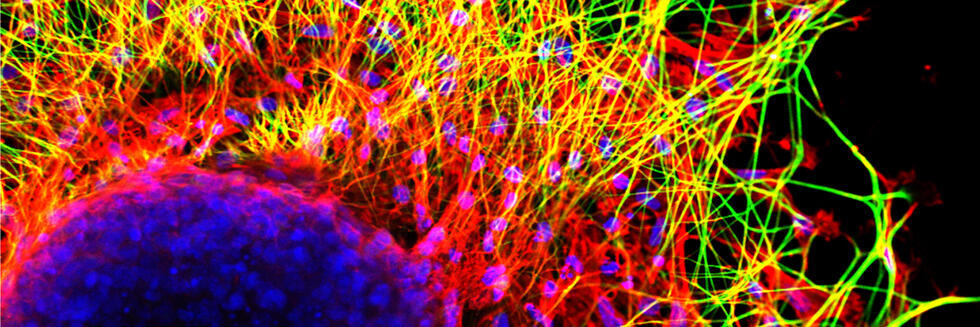
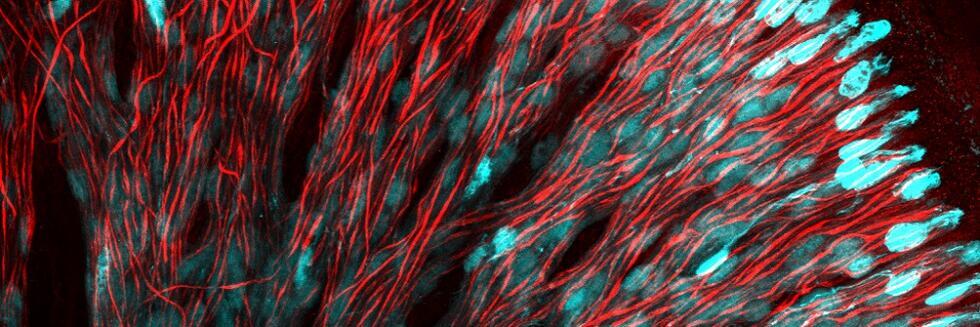
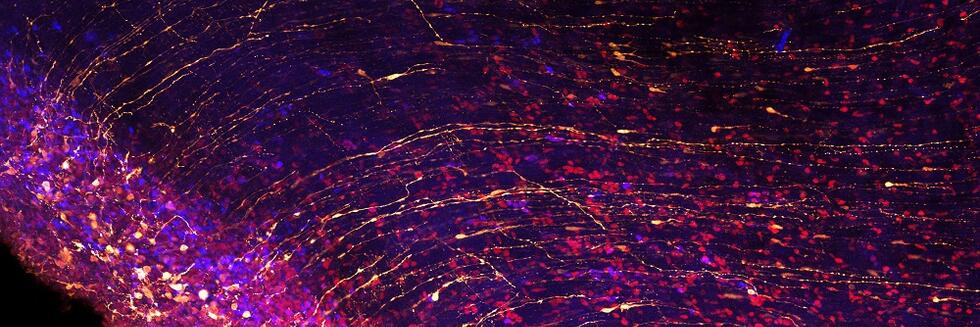
The human brain is a highly organized structure containing myriad axon tracts that follow precise pathways and make predictable connections. Model organism research has provided tremendous advances in our understanding of the principles and molecules governing the growth and guidance of these axons. Despite these advances, only a handful of human disorders clearly resulting from errors in these processes have been identified. Our lab has defined a series of such disorders through our studies of inherited congenital eye movement disorders now referred to as the congenital cranial dysinnervation disorders (CCDDs). Beginning with patients ascertained from around the world, we use clinical and neuroimaging approaches to define inherited human syndromes, genetic approaches to identify the underlying disease genes, and molecular approaches to study the role of these genes in normal and abnormal neurodevelopment. The disease genes we have identified to date highlight various steps essential to axon growth and guidance, including mutations in ROBO3, CHN1, and KIF21A.  Individuals with the autosomal recessive disorder ‘horizontal gaze palsy with progressive scoliosis’ have uncrossed corticospinal and sensory tracts and pontine axons and harbor homozygous mutations in the axon guidance gene ROBO3 (Rig1). Mouse Robo3/Rig1 is required for midline crossing of axons in the hindbrain. Individuals with a complex strabismus disorder called Duane syndrome can harbor dominant gain-of-function mutations in CHN1 that hyperactive alpha2-chimaerin, a RacGAP signaling molecule downstream of axon guidance receptors. These mutations result in stalling of axons of the oculomotor and abducens cranial nerves. Individuals with another complex strabismus disorder called CFEOM1 harbor mutations in a very specific region of the stalk of the  developmental kinesin, KIF21A. Kinesins are molecular motors that carry cargo along the microtubule cytoskeleton to the growth cone of a developing axon, and these dominant mutations in KIF21A appear to alter the delivery of KIF21A cargo to the developing extraocular muscles. Thus, by identifying the genetic defects in these complex eye movement disorders, we are defining a series of genes essential to normal axon guidance in humans. We have generated mouse loss- and gain-of-function models for several of these human disorders, and are using in vitro and in vivo approaches to investigate the function of the encoded proteins in normal and aberrant axon guidance.


The lab is also studying the genetic contributions to more common forms of strabismus such as esotropia and exotropia (lazy eye).  These forms of strabismus are not typically inherited in a Mendelian fashion, but do run in families and appear to be inherited as complex genetic traits.  Thus, we are embarking on both linkage analysis and association studies to identify genetic variants that put one at higher risk for common strabismus as well.


References:

  • Nankano M, Yamada K, Fain J, Sener EC, Selleck CJ, Awad AH, Zwaan J, Mullaney PB, Bosley TM, Engle EC. (2001)Homozygous mutations in ARIX (PHOX2A) result in congenital fibrosis of the extraocular muscles type 2 (CFEOM2). Nature Genetics,29:315-320.
  • Yamada K, Andrews C, Chan W-M, McKeown CA, Magli A, de Berardinis T, Loewenstein A, Lazar M, O'Keefe M, Letson R, London A, Ruttum M, Matsumoto N, Saito N, Morris L, Del Monte M, Johnson RH, Uyama E, Houtman WA, de Vries B, Carlow TJ, Hart BL, Krawiecki N, Shoffner J, Vogel MC, Katowitz J, Goldstein SM, Levin AV, Sener EC, Ozturk BT, Akarsu AN, Brodsky MC, Hanisch F, Cruse RP, Zubcov AA, Robb RM, Roggenkäemper P, Gottlob I, Kowal L, Ravi Battu R, Traboulsi EI, Franceschini P, Newlin A, Demer JL, Engle EC. (2003)Heterozygous mutations of the kinesin KIF21A in congenital fibrosis of the extraocular muscles type 1 (CFEOM1). Nature Genetics,35:318-321.
  • Jen JC, Chan W-M, Bosley TM, Wan J, Carr JR, Ru¨b U, Shattuck D, Salamon G, Kudo L, Ou J, Lin DDM, Salih MAM, Kansu T, Dhalaan H, Al Zayed Z, MacDonald DB, Stigsby B, Plaitakis A, Dretakis EK, Gottlob I, Pieh C, Traboulsi EI, Wang Q, Wang L, Andrews C, Yamada K, Demer JL, Karim S, Alger J, Geschwind DH, Deller T, Sicotte NL, Nelson SF, Baloh RW, Engle EC.(2004) Mutations in a human robo gene disrupt hindbrain axon pathway crossing and morphogenesis. Science,304:1509-1513, Published online 22 April 2004;10.1126/science.1096437.
  • Tischfield MA, Bosley TM, Salih MAM, Alorainy IA, Sener EC, Nester MJ, Oystreck DT, Chan W-M, Andrews C, Erickson RP, Engle EC Homozygous HOXA1 mutations disrupt human brainstem, inner ear, cardiovascular and cognitive development. Nat Genet. 2005, Oct;0037(10):1035-7. Published online 11 Sept 2005.
  • Miyake N, Chilton J, Psatha M, Cheng L, Andrews C, Chan W-M, Law K, Crosier M, Lindsay S, Cheung M, Allen J, Gutowski NJ, Ellard S, Young E, Iannaccone A, Appukuttan B, Stout JT, Christiansen S, Ciccarelli ML, Baldi A, Campioni M, Zenteno JC, Davenport D, Mariani LE, Sahin M, Guthrie S, Engle EC.  Human CHN1 mutations hyperactivate α2-chimaerin and cause Duane’s retraction syndrome. Science, 2008 Aug 8;321(5890):839-43. Epub 2008 July 24.

Next faculty member (Emad Eskandar)

Previous faculty member (Florian Engert)