DMS Home  /  About DMS  /  Current Student Resources  /  Contact Us  /  Search 

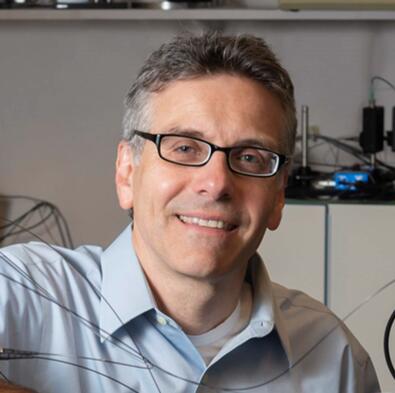
Charles Czeisler, M.D., Ph.D.

Frank Baldino, Jr., Ph.D. Professor of Sleep Medicine

Brigham and Women's Hospital
Div of Sleep Medicine Rm 438A
221 Longwood Ave
Boston, MA 02115
Telephone: 617-732-4013
Fax: 617- 732-4015
Email: caczeisler@hms.harvard.edu
Lab Web site: Division of Sleep Medicine
Predocs: 4 Postdocs: 21 Completed PhD's: 6

Chalres Czeisler

Investigative work in our research group focuses on understanding the neurobiology of the human circadian pacemaker, located in the suprachiasmatic nuclei (SCN) of the hypothalamus, and applying that knowledge to clinical medicine and occupational health. Our earliest work revealed that sleep duration and structure was regulated by the output of this pacemaker. Since then, we have unmasked the endogenous circadian component of various neuroendocrine, metabolic, thermoregulatory and behavioral rhythms controlled by the pacemaker, by studying human subjects under constant environmental and behavioral conditions. Our current research focuses on four main areas. The first is the neurobiology of circadian photoreception in humans. We have shown that among human subjects who completely lack conscious visual perception, there are a subset who retain normal circadian responsiveness to light. This response is mediated through the eyes and persists even in some subjects who have severe retinal degeneration. We are investigating the influence of light intensity, duration, timing and wavelength on circadian entrainment. The second involves evaluation of how circadian and homeostatic processes interact to regulate sleep and neurobiological function during wakefulness. The third is the examination of the role of melatonin in the organization of sleep and circadian rhythms. Melatonin is typically secreted in a circadian manner by the pineal gland, which is controlled by the SCN via a circuitous neural peripheral pathway. Other ongoing research in my lab includes functional magnetic imaging, quantitative analysis of sleep and waking EEG, and the influence of sleep loss on the deployment of visual attention.


References:

  • Barger LK, Cade BE, Ayas NT, Cronin JW, Rosner B, Speizer FE, Czeisler CA (2005) Harvard Work Hours, Health and Safety Group, Extended work shifts and the risk of motor vehicle crashes among interns, N. Engl. J. Med. 352:125-134.
  • Wright KP Jr., Hull JT, Hughes RJ, Ronda JM, Czeisler CA (2006) Sleep and wakefulness out of phase with internal biological time impairs learning in human, J. Cognitive Neurosci 18:508-521.
  • Wyatt JK, Dijk DJ, De Cecco Ar, Czeisler CA (2006) Sleep-facilitating effect of exogenous melatonin in healthy young men and women is circadian phase dependent, Sleep 29:609-618.
  • St. Hilaire MA, Klerman EB, Khalsa SB, Wright Jr., KP, Czeisler CA, Kronauer RE (2007) Addition of a non-photic component to a light-based mathematical model of the human circadian pacemaker, J. Theoretical Biol 247(4):583-599l.
  • Santhi N. Aeschbach D, Horowitz TS, Czeisler CA (2008) The impact of sleep timing and bright light exposure on attentional impairment during night work, J. Biol. Rhythms 23:341-352.