DMS Home  /  About DMS  /  Current Student Resources  /  Contact Us  /  Search 

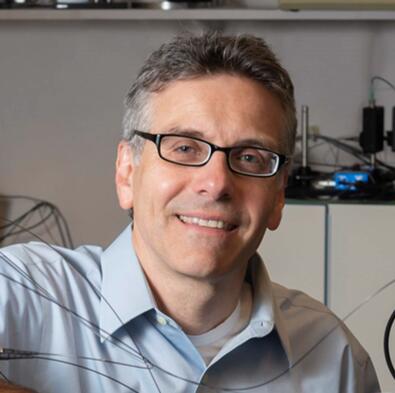
William Carlezon, Ph.D.

Associate Professor of Psychiatry

McLean Hospital
Behavioral Genetics Lab, Mrc 217
115 Mill St
Belmont, MA 02478
Telephone: 617-855-2021
Fax: 617- 855-2023
Email: bcarlezon@mclean.harvard.edu
Website: Carlezon Lab Page
Predocs: 1 Postdocs: 4 Completed PhD's: 0

William Carlezon

The Behavioral Genetics Laboratory (BGL) is a multidisciplinary, preclinical research program that explores in animals how genes affect complex motivated behaviors.  We are particularly interested in how experiences such as exposure to psychotropic drugs (including illicit substances and clinically-prescribed treatments such as methylphenidate or antidepressants) or stress affect gene expression within the mesolimbic system (ventral tegmental area, nucleus accumbens) and related structures (frontal cortex, amygdala, bed nucleus of the stria terminalis).  We study how these molecular adaptations lead to alterations in motivated (reward- or aversion-driven) behaviors.

We can mimic the effects of drug exposure or stress on gene expression through the use of engineered viral vectors, which allow us to transfer genes directly into select brain areas.  We can also manipulate gene expression using genetically engineered mice.  We use a variety of behavioral assays in rodents (place conditioning, rewarding brain stimulation, fear-potentiated startle, prepulse inhibition, forced swimming, 5-choice serial reaction time task), each of which models key aspects of addiction or neuropsychiatric conditions such as depression, mania, schizophrenia, anxiety, and post-traumatic stress disorder (PTSD).

Researchers in the BGL use a wide range of methodologies, including behavioral analyses (in rats and mice), stereotaxic surgery, histology, neuroanatomy, gene microarrays, and medicinal chemistry.  We collaborate extensively with other institutions: for example, we are part of an NIMH Conte Neuroscience Center with researchers at UT-SWMC and Yale.  Another unique aspect of this program is our participation in translational research with clinical programs at McLean Hospital.  Treatments that we have discovered or evaluated in the lab, including drugs and a novel form of transcranial magnetic stimulation, are currently being tested in humans with depressive disorders.  Thus we offer a broad perspective on neuroscience within the context of the study and treatment of psychiatric illness.


References:

Carlezon WA Jr, Beguin C, DiNieri J, Baumann MH, Richards M, Todtenkopf MS, Rothman RB, Ma Z, Lee DY-L, Cohen BM (2006) Depressive-like effects of the k-opioid receptor agonist Salvinorin A on behavior and neurochemistry in rats.  Journal of Pharmacology and Experimental Therapeutics 314: 440-447

Chartoff EH, Mague SD, Barhight MF, Smith AM, Carlezon WA Jr (2006) Behavioral and molecular effects of dopamine D1 receptor stimulation during naloxone-precipitated morphine withdrawal.  Journal of Neuroscience 26: 6450-6457

Meloni EG, Gerety LP, Knoll AT, Cohen BM, Carlezon WA Jr (2006) Behavioral and anatomical interactions between dopamine and corticotropin-releasing factor (CRF) in the rat.  Journal of Neuroscience 26: 3855-3863

Todtenkopf MS, Parsegian A, Neve RL, Carlezon WA Jr (2006) Brain reward regulated by glutamate receptor subunits in the nucleus accumbens shell.  Journal of Neuroscience 26: 11665-11669

Knoll AT, Carroll FI, Meloni EG , Carlezon WA Jr (2007) Anxiolytic-like effects of k-opioid receptor antagonists in behavioral models of unlearned and learned fear in rats.  Journal of Pharmacology and Experimental Therapeutics, in press

Roybal K, Theobold D, Birnbaum S, DiNieri JA; Graham A, Russo S, Vaishnav K, Kumar A, Peevey J, Oehrlein N, Vitaterna M, Orsulak P, Takahashi JS, Nestler EJ, Carlezon WA Jr, McClung CA (2007) Mania-like behavior induced by disruption of CLOCK function.  Proceedings of the National Academy of Sciences USA, 104: 6406-6411