DMS Home  /  About DMS  /  Current Student Resources  /  Contact Us  /  Search 

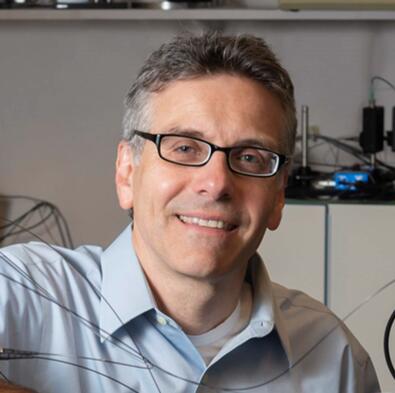
Bruce Bean, Ph.D.

Professor of Neurobiology

Harvard Medical School
Neurobiology Rm 301
220 Longwood Ave
Boston, MA 02115
Telephone: 617 - 432-1139
Fax: 617- 734-7557
Email: bruce_bean@hms.harvard.edu
Predocs: 2 Postdocs: 3 Completed PhD's: 4

Bruce Bean

Each neuron in the brain possesses about 30 different types of ion channels, molecular pores in the membrane of the neuron. It is the coordinated, transient opening ("gating") of particular types of ion channels that underlies electrical signaling by the neuron. Work by many investigators over the last twenty years has given us detailed information about the molecular characteristics of ion channels. However, much less is understood about how the many ion channels expressed in a single central neuron work together to produce the firing patterns characteristic of that particular neuron. This is the problem we are focused on.

We are especially interested in the ionic mechanisms that underlie pacemaking, the spontaneous firing of central neurons in the absence of synaptic input. Electrical signaling in the central nervous system is characterized by oscillatory activity at all levels, and this originates as pacemaking at the single cell level. To study pacemaking in central neurons, we prepare isolated neurons from particular brain regions. For many neurons, pacemaking activity is retained in acutely isolated cell bodies. It is then possible to analyze how pacemaking results from the coordinated activity of particular ion channels by using the voltage-clamp technique together with various drugs and toxins to identify currents carried by different ion channels.

Central neurons currently being studied include cerebellar Purkinje neurons, histaminergic neurons in the tuberomammillary nucleus of the hypothalamus, neurons of the subthalamic nucleus, and midbrain dopaminergic neurons (in collaboration with Dr. Elio Raviola's laboratory). In all of these neurons, pacemaking activity appears to depend on tetrodotoxin-sensitive, voltage-dependent sodium current flowing at "subthreshold" membrane potentials. However, the properties of the sodium current driving pacemaking are different in the different cell types, and other currents are also involved.

Work in the laboratory is based mainly on electrophysiological recording from central neurons, both in brain slice and after acute dissociation. The electrophysiological work is complemented by immunohistochemical studies examining the subcellular expression patterns of various ion channels. The work relies on pharmacological tools, and we are also more broadly interested in the neuropharmacology of such agents. Recent work has included characterization of calcium channel blockers, potassium channel blockers, and anticonvulsant agents.


References:

  • Raman IM, Sprunger LK, Meisler MH, Bean BP (1997) Altered subthreshold sodium currents and disrupted firing patterns in Purkinje neurons of Scn8a mutant mice. Neuron 19:881-891.
  • McDonough SI, Bean BP (1998) Mibefradil inhibition of T-type calcium channels in cerebellar Purkinje neurons. Molecular Pharmacology 54: 1080-1087.
  • Raman IM, Bean BP (1999) Ionic currents underlying spontaneous action potentials in isolated cerebellar Purkinje neurons. Journal of Neuroscience 19:1663-1674.
  • Greif GJ, Sodickson DL, Bean BP, Neer EJ, Mende U. (2000) Altered regulation of potassium and calcium channels by GABAB and adenosine receptors in hippocampal neurons from mice lacking ?. Journal of Neurophysiology 83:1010-1018.
  • Raman IM, Bean BP. (2001) Inactivation and recovery of sodium currents in cerebellar Purkinje neurons: evidence for two mechanisms. Biophysical Journal 80:729-37