
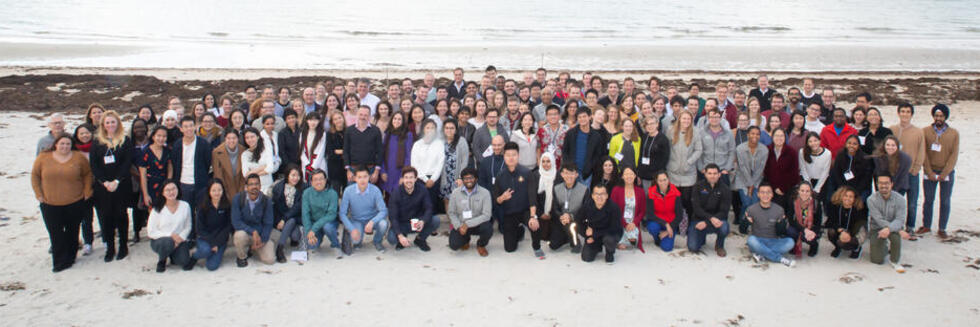
The Dimitroff Laboratory is led by principal investigator, Charles J. Dimitroff, Ph.D., who is an Assistant Professor of Dermatology at Brigham and Women’s Hospital, Harvard Medical School. The Laboratory is located in the Harvard Skin Disease Research Center on the 6th floor of the Harvard Institutes of Medicine. Dr. Dimitroff received his Ph.D. from Roswell Park Cancer Institute, State University of New York at Buffalo in cancer pharmacology and tumor metastasis. He subsequently trained as a post-doctoral fellow with Robert Sackstein, M.D., Ph.D. in the Department of Dermatology at Brigham and Women’s Hospital and researched cell adhesion processes relating to migration of immune cells to bone and skin. These educational experiences have led to his specialized expertise in the glycobiology of inflammation and tumor metastasis. The overall goal of the Dimitroff Laboratory is to elucidate the critical molecular determinants on the surfaces of immune/tumor cells that confer tissue-specific tropism. Please visit The Dimitroff Laboratory website to obtain more information (http://www.dimitrofflab.bwh.harvard.edu).
Dr. Dimitroff and his team of postdoctoral fellows, research technicians and students are currently involved in studies that help illuminate how immune cells, namely T cells and natural killer cells, traffic to inflamed skin and how prostate tumor cells metastasize to bone. More specifically, they are investigating the identity and functional regulation of cell surface receptors that mediate dynamic binding to the vascular wall and trigger movement of these cells from inside of the bloodstream to the parenchyma of skin or bone. The function of these glycoprotein receptors causes a cell adhesion phenomenon called rolling, which is essential for initiating a cascade of successive molecular interactions preceding tissue entry. The Dimitroff Laboratory hypothesizes that these glycoprotein “rolling” receptors are, in part, responsible for development of cutaneous inflammatory disorders and for metastasis of circulating tumor cells to bone. The functional identity of such receptors ascertained by the Dimitroff Laboratory could provide an opportunity for development of anti-inflammatory/metastatic therapeutics targeting these unique molecules. |
Papers & Publications:
1. Dimitroff CJ, Kupper TS, Sackstein R. Prevention of leukocytic migration to inflamed skin with a novel fluorosugar modifier of cutaneous lymphocyte-associated antigen. J. Clin. Invest., 2003; 112, 1008-1018.
2. Dimitroff CJ, Lechpammer M, Long-Woodward D, Kutok JL. Rolling of human bone-metastatic prostate tumor cells on human bone marrow endothelial cells under shear flow is mediated by E-selectin. Cancer Research, 2004; 64(15):5261-5269.
3. Dimitroff CJ, Descheny L, Trujillo N, Kim R, Huang W, Nguyen V, Pienta K, Kutok JL, Rubin MA. Identification of leukocyte E-selectin ligands, P-selectin glycoprotein ligand-1 and E-selectin ligand-1, on human metastatic prostate tumor cells. Cancer Research, 2005; 65(13):5750-5760.
4. Descheny L, Gainers ME, Walcheck B, Dimitroff CJ. Ameliorating skin-homing receptors on malignant T cells with a fluorosugar analog of N-acetylglucosamine: P-selectin ligand is a more sensitive target than E-selectin ligand, J. Invest. Derm., 2006; 126(9):2065-2073.
5. Yamanaka K, Dimitroff CJ, Fuhlbrigge RC, Kakeda M, Kurokawa I, Mizutani H, Kupper TS. Vitamins A and D are potent inhibitors of cutaneous lymphocyte-associated antigen expression. J. Allergy Clin. Immunol., In press. |