|
Ulrich H. von Andrian
Dept. of Pathology, Harvard Medical School
Senior Investigator, The CBR Institute for Biomedical Research
77 Ave. Louis Pasteur, Room 836
Boston, MA 02115
Tel: 617-432-6827
Fax: 617-432-6829
email:uva@cbr.med.harvard.edu
Website:The von Andrian Lab Page
10 postdoctoral fellows, 4 graduate students
|
 |
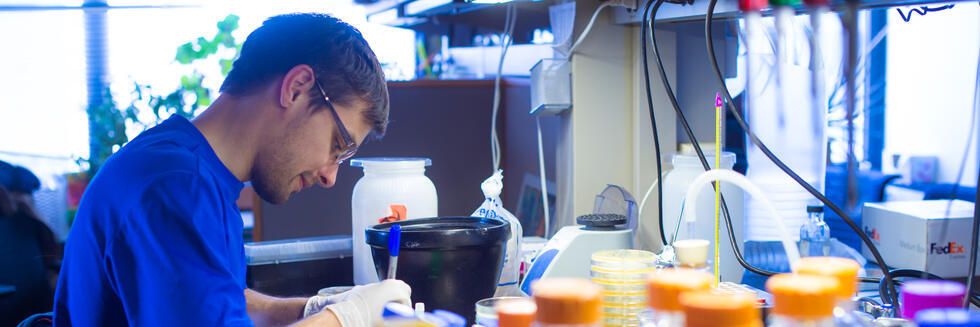
We are trying to understand how circulating cells manage to leave the blood stream and home to distinct organs or tissues where they may have crucial physiologic functions or may cause disease. Despite considerable progress in this field, it is still beyond the reach of even the most sophisticated in vitro methodology to simulate the complex interplay of physical, cellular, biochemical, and other factors that influence blood cell behavior in microvessels. Therefore, we are employing intravital microscopy to study the molecular mechanisms of interactions between blood-borne cells and the intact vascular wall by direct observation of lymphoid and non-lymphoid tissues in anesthetized mice. This is achieved by intra-arterial injection of fluorescently tagged leukocyte subsets from human or murine donors or transfected cell lines. We use fluorescence video-microscopy, multi-photon/confocal microscopy and computer-assisted image analysis to quantitatitate cell behavior in the downstream microvasculature. Using this approach, we have demonstrated that leukocyte homing to most target tissues requires an initial tethering step that leads to rolling in postcapillary venules and is followed by an activation step which, in turn, triggers stationary adhesion and emigration. Each of these steps involves distinct molecular pathways whose unique combination is the reason why certain leukocyte subsets migrate to a particular organ, whereas others don't.
We are now working on dissecting the site-specific adhesion cascades that direct myeloid and lymphoid cells, hematopoietic progenitor cells and platelets to normal and diseased tissues. These include:lymph node, Peyer's patch, gut, striated muscle, skin, bone marrow, bone, knee joint, bladder, liver and pancreas in adult animals. Rotation students may be trained in one (or more) of these models (including microsurgical procedures).
We have also generated transgenic strains of mice that express different fluorescent proteins in distinct lymphocyte subsets. In one of these strains, called T-GFP, T cell restricted expression of transegenic GFP is specifically lost when CD8 T cells become cytotoxic effector cells. These animals are now being used in studies on the migratory behavior of naive, effector and memory cells. In addition, several new transgenic strains have been generated to identify molecular events involved in effector and memory T cell differentiation. To this end, transgenic T cells are currently being studied in our in vivo assays, including a newly established multi-photon microscopy system, which permits us to analyze T cell migration and interactions with antigen presenting cells in as many as six dimensions (i.e. in space, time, fluorescence color and intensity). To relate our in vivo observations to circumscribed molecular events we employ also a number of in vitro approaches such as static and flow adhesion assays, flow cytometry, biochemistry, molecular biology, and immunoelectron microscopy.
|
Papers & Publications:
- Stein, J.V., Rot, A., Manjunath, N., Nakano, H., Luo, Y., Quackenbush, E.J., Gunn, M.D., Matsuzawa, A., Dorf, M.E., and von Andrian, U.H. The CC chemokine thymus-derived chemotactic agent 4 (TCA-4, secondary lymphoid tissue chemokine, 6Ckine, Exodus-2) triggers lymphocyte function-associated antigen-1-mediated arrest of rolling T lymphocytes in peripheral lymph node high endothelial venules. J. Exp. Med. 191: 61-75, 2000.
- Von Andrian, U.H. and Mackay, C. T cell function and migration - two sides of the same coin. New Eng. J. Med.: 343: 1020-1034, 2000.
- Manjunath, N., Shankar, P., Wan, J., Weninger, W., Crowley, M.A., Hieshima, K., Springer, T.A., Fan, X., Shen, H., Lieberman, J. and von Andrian, U.H. Effector differentiation is not prerequisite for generation of memory cytotoxic T lymphocytes. J. Clin.Invest. 108: 871-878, 2001.
- Weninger, W., Crowley, M.A., Manjunath, N. and von Andrian U.H. Migratory properties of naïve, effector, and memory CD8+ T cells. J. Exp. Med. 194: 953-966, 2001.
- Mora, J.R., Bono, M.R., Manjunath, M., Weninger, W., Cavanagh, L.L., Rosemblatt, M. and von Andrian, U.H. Selective imprinting of gut-homing T cells by Peyer's patch dendritic cells. Nature: 424:88-93, 2003.
|
|