Frederick W. Alt

Boston Children's Hospital
Karp Family Research Building, Rm. 09216
1 Blackfan Circle
Boston, MA 02115
Tel: 617-919-2539
Fax: 617-730-0948
Email: alt@enders.tch.harvard.edu
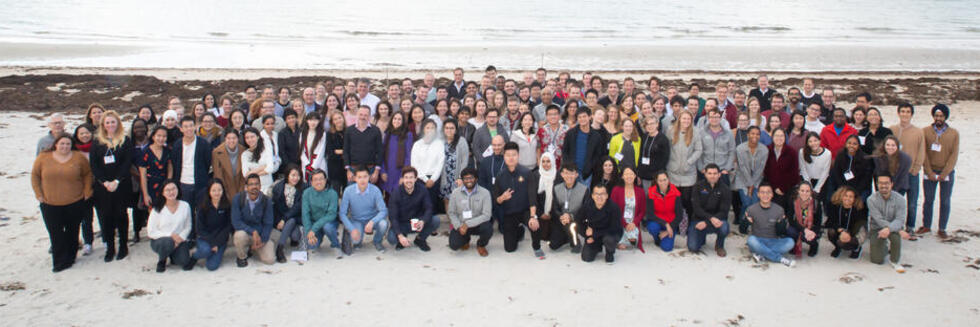
Please see the electronic album of Alt Lab alumni, compiled by HHMI in 2010, titled: "FREDERICK W. ALT: A SUPPORTIVE MENTOR AND HARD-DRIVING SCIENTIST"
The broad focus of the Alt lab is the elucidation of mechanisms that maintain genomic stability in mammalian cells. More specifically, the lab studies V(D)J recombination in developing B and T lymphocytes and IgH heavy chain class switch recombination (CSR) and somatic hypermutation in mature B lymphocytes. Studies of these processes employ biochemical approaches to elucidate molecular mechanisms by which the RAG endonuclease and Activation Induced Cytidine Deaminase function on DNA to initiate, respectively, VDJ recombination and CSR. As one example, our recent studies showed a role for the RNA exosome in targeting AID to both strands of duplex DNA. Other studies focus on the elucidation of genetic and epigenetic chromosomal processes that regulate how RAG and AID are targeted to their specific chromosomal DNA substrates. In this regard, our recent work defined a control region, termed IGCR1, in the IgH locus that regulates proximal versus distal VH usage, lineage-specificity, ordered assembly of VH, D, and JH segments and feedback regulation/allelic exclusion. Functionally, we showed IGCR1 to employ CTCF binding elements and to be involved in the formation of large IgH loops that contain distant enhancer elements. Other studies employ genetic and cytogenetic approaches to study roles of general DNA double strand break (DSB) repair and response pathways in VDJ recombination and CSR, and the interplay of DSB repair and response pathways in suppressing genomic instability and cancer. For such studies, the lab developed several new models for B and T cell lymphomas and brain tumors. A major new lab research area focuses on how organization of the genome in the nucleus influences programmed gene rearrangements and chromosomal translocations. For this purpose, we have developed a high throughput genomic translocation sequencing strategies to identify the universe of translocations (e.g., the translocatome) that arise from a fixed DSB. This approach is also useful for defining genomic DSBs. Our goal is to establish the contribution of mechanistic elements (three dimensional genome organization, DSBs, transcription, epigenetic modifications, repair pathways, etc) that contribute to the formation of translocations and other forms of genomic instability in mouse and human cells.
Publications (Immunology Graduate Students listed in Bold)
1. Chiarle, R., Zhang, Y., Frock, R.L., Lewis, S.M., Molinie, B., Ho, Y-J. Myers, D.R., Choi, V.W., Compagno, M., Malkin, D.J., Neuberg, D., Monti, S., Giallourakis, C.C., Gostissa, M. and Alt, F.W. Genome-wide translocation sequencing reveals mechanisms that shape the translocatome of primary B lymphocytes. Cell. 2011 Sep 30;147(1):107-19
2. Guo, C., Yoon, H.S., Franklin, A, Jain, S., Ebert. A., Cheng, H. L., Hansen, E., Despo, O., Bossen, C., Vettermann, C., Bates, J. G., Richards, N., Myers, D., Patel, H., Gallagher, M., Schlissel, M. S., Murre, C., Busslinger, M., Giallourakis, C. C., and Alt, F. W. CTCF Binding Elements Mediate Control of V(D)J Recombination. Nature. 2011 Sep 11;477(7365):424-30.
3. Zha, S., Guo, C., Boboila, C., Oksenych, V., Cheng, H-L., Zhang, Y., Wesemann, D.R., Yuen, G., Patel, H., Goff, P.H., Dubois, R.L. and Alt, F.W. ATM damage response and XLF repair factor are functionally redundant in joining DNA breaks. Nature 2011 Jan 13;469(7329):250-4.
4. Basu, U., Meng, F., Keim, C., Grinstein, V., Pefanis, E., Eccleston, J., Zhang, T., Meyers, D., Wasserman, C., Wesemann, D., Januszyk, K., Gregory, K., Deng, D., Lima, C., and Alt, F.W. The RNA Exosome Targets the AID Cytidine Deaminase to Both Strands of Transcribled Duplex DNA Substrates. Cell. 2011 Feb 4;144(3):353-63.
5. Zhang, Y., McCord, R.P., Ho, Y-J., Lajoie, B.R., Hildebrand, D.G., Simon, A.C., Becker, M.S., Alt, F.W.# and Dekker, J.# Spatial organization of the mouse genome and its role in recurrent chromosomal translocations. Cell. 2012 Mar 2;148(5):908-21. # Co-corresponding authors
FREDERICK W. ALT: A SUPPORTIVE MENTOR AND HARD-DRIVING SCIENTIST
Last Update: 12/13/2012