Biological and Biomedical Science
 DMS Home  /  About DMS  /  Current Student Resources  /  Contact Us  /  Search 

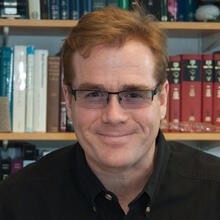
David A. Sinclair

Department of Pathology
Harvard Medical School
New Research Building, Room 931
77 Avenue Louis Pasteur
Boston, MA 02115
Tel: (617) 432-3931
Fax: (617) 432-6225
Email: david_sinclair@hms.harvard.edu
Web page: The Sinclair Lab Page
6 postdoctoral fellows, 6 graduate students, 2 undergraduate students, 1 technician

Our goal is to devise ways to prevent and treat the major diseases of society by manipulating genes that control how fast we age. In the past 10 years there has been a paradigm shift in our understanding of aging. Until the 1990's, almost all researchers believed that the aging process was too complex to find drugs that could slow it. Then geneticists began to uncover single genes that could dramatically extend the lifespan of laboratory organisms such as yeast, worms, flies, and mice. How could this be? We now know that the rate of aging is not predetermined - it is naturally regulated by a few critical genes. These genes underlie the remarkable effects of the diet known as calorie restriction (CR), which delays aging in every species tested, from yeast to primates. CR is currently the only treatment that can prevent all diseases of aging including cancer, heart disease, osteoporosis, diabetes and neurodegeneration. Recent studies in our lab and others demonstrate that the ability of CR to extend lifespan in models organisms is governed by the Sirtuins. Animals lacking Sirtuin genes do not respond to CR and additional gene copies extend lifespan. Based on these findings, we have engineered small molecules that can activate mammalian Sirtuins in vivo, with a view to developing drugs that can (i) treat the diseases of aging and (ii) promote cell survival and recovery following an injury. We utilize any approach we need to answer a specific question including chemistry, biochemistry, genetics and cell biology. Models systems include yeast, C. elegans, mammalian cell culture and rodents.


References:

  • Cohen, HY, Miller, C, Bitterman, KJ, Wall, NR, Hekking, B, Kessler, B, Howitz, KT, Gorospe, M, de Cabo, R and Sinclair, DA. (2004) Calorie restriction promotes cell survival by inducing SIRT1. Science, 305:390-2.
  • Wood, J, Rogina, B, Lavu, S, Howitz, KT, Helfand, SL, Tatar, M, Sinclair, DA. (2004). Sirtuin activators mimic calorie restriction and delay aging in metazoans. Nature, 430:686-9.
  • Lamming, D, Latorre-Esteves, M, Medvedik, O, Wong, S.N., Tsang, F.A, Wang, C, Lin, S-J, Sinclair, DA. HST2 mediates SIR2-independent lifespan extension by calorie restriction. Science, 2005; 309(5742):1861-4.
  • Baur, J, Pearson, K., et al. (2006) Resveratrol increases health and survival of mice on a high calorie diet. Nature 444(16): 337-342