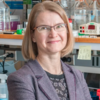
Thomas Michel
Co-Director, Leder Program in Human Biology and Translational Medicine
Professor of Medicine (Biochemistry) and
Federman Chair in Medical Education
Dean for Education, Harvard Medical School
Lab Address:
Brigham and Women's Hospital
Thorn Building 1210A
20 Shattuck Street
Boston, MA 02115
Tel: (617) 732-7376
Fax: (617) 732-5132
Email: thomas_michel@harvard.edu
Web Page: The Michel Lab Page
5 postdoctoral fellows, 1 graduate student
My lab uses biochemical and cell biological approaches to explore signal transduction pathways in the cells and tissues of the cardiovascular system, with a particular focus on studying nitric oxide synthase pathways in endothelial cells and cardiac myocytes and their alterations in disease states.
Nitric oxide (NO) has been studied for many years as the active compound formed from drugs such as nitroglycerin, but more recently we and others discovered a family of nitric oxide synthases that catalyzes the formation of NO in diverse mammalian tissues. The endothelial isoform of nitric oxide synthase (eNOS) is a key signaling enzyme that is activated by a variety of cell surface receptors and is involved in the control of vascular smooth muscle relaxation and platelet aggregation.
Post-translational modifications of eNOS modulate the enzyme’s subcellular targeting to specialized lipid-rich signal-transducing microdomains in the plasma membrane termed caveolae. We are studying the intracellular pathways that regulate eNOS S-nitrosylation, palmitoylation, phosphorylation, and subcellular targeting, and are exploring novel protein-protein interactions that modulate eNOS enzyme activity. We are also investigating the interplay among protein kinases, G protein subunits and eNOS in plasmalemmal caveolae, and are studying the receptor-regulated translocation of eNOS, G protein subunits and associated signaling proteins using biochemical, biophysical, and cellular imaging approaches. We have applied RNA interference methodologies to “knock down” a broad range of endothelial signaling proteins and have identified new pathways involved in the regulation of angiogenesis. We are also exploring the role of the AMP-activated protein kinase (AMPK) in eNOS regulation in endothelial cells and in the heart, with a particular interest in the roles of these pathways in diabetes.
Some of our recent studies are exploring the roles of “statin” drugs (HMG CoA reductase inhibitors commonly used in the treatment of cardiovascular disease) on the subcellular targeting and protein associations of eNOS. We found that statins can activate the small GTPase Rac1, a cytoskeleton-associated regulatory protein with key roles both in eNOS regulation and in the generation of reactive oxygen species implicated in vascular pathobiology, We are seeking to understand the roles of statins in the differential modulation of eNOS activity and in the regulation of reactive oxygen species.
References:
- Chen H, Levine Y, Golan DE, Michel T, and Lin AJ. ANP-initiated cGMP pathways regulate VASP phosphorylation and angiogenesis in vascular endothelium. J Biol Chem 2008 283:4439-4447.
- Michel, T. Nitric oxide synthase 3. UCSD-Nature Molecule Pages (2009). (doi:10.1038/mp.a001660.01).
- Kou R, Sartoretto J and Michel T. Regulation of Rac1 by simvistatin in endothelial cells: differential roles of AMP-activated protein kinase and calmodulin-dependent kinase kinase-β. J Biol Chem 2009, 284: 14734-14743.
- Sugiyama T, Levy B and Michel T. Tetrahydrobiopterin recycling: a key determinant of eNOS-dependent signaling pathways in vascular endothelium. J Biol Chem, 2009 284: 12691-12700.
BBS webpage updated 12/02/2009