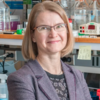
Matthew Meyerson


Department of Pathology
Dana-Farber Cancer Institute
Department of Medical Oncology
Dana Building, Room 1540
44 Binney Street
Boston, MA 02115
Tel: (617) 632-4768
Fax: (617) 582-7880
Email: matthew_meyerson@dfci.harvard.edu
12 postdoctoral fellows, 6 graduate students


We strive to discover genomic events that cause human cancers and infectious causes for diseases of unknown origin.  We then seek to apply these discoveries to improving diagnosis and treatment for these diseases.  One particular focus is lung cancer pathogenesis and targeted therapy.


Somatic genetic alterations in cancer: We use genome-scale approaches to discover chromosomal alterations and cancer-causing mutations, working closely with colleagues at the Broad Institute. Our group is active in The Cancer Genome Atlas (TCGA) project to perform multi-modality analyses of human cancers, and played a major role in the first TCGA manuscript on glioblastoma (TCGA Research Network, 2008).


Using single-nucleotide polymorphism (SNP) arrays, we have analyzed copy number alterations in over 3,000 human cancer samples, and have defined both lineage-specific and cancer-universal regions of amplification and deletion (Beroukhim et al., 2010).  Among recent findings, we have identified the most common DNA amplification in lung adenocarcinoma as targeting NKX2-1, a lung lineage-determining transcription factor (Weir et al., 2007) and  in squamous cell lung carcinoma as targeting SOX2, also a lineage-specific transcription factor (Bass et al., 2009). 


By cancer sequencing, we identified mutations in the epidermal growth factor receptor tyrosine kinase gene, EGFR, in lung adenocarcinomas  (Paez et al., 2004), and in glioblastomas (Lee et al., 2006).  More recently, we have identified activating mutations of FGFR2 in multiple cancers (Dutt et al., 2008).  We pioneered the use of single-template sequencing in cancer genome analysis (Thomas et al., 2006) and are applying these methods widely.


Recently, both as part of TCGA and other efforts, we have initiated multiple studies of the whole genome sequences of a variety of human cancer types.


Functional analysis of lung cancer genes:  We work to understand transformation by the major oncogenes that cause lung cancer, focusing on EGFR, KRAS, and NKX2-1, and to apply this understanding to lung cancer therapy.  For EGFR, we demonstrated that distinct mutations are differentially sensitive or resistant to distinct inhibitors (Greulich et al., 2005), establishing the concept of mutant-selective therapy.  We are now studying a large number of novel oncogenic mutants identified in a genome sequencing screen (Ding et al., 2008) and are continuing to pursue targeted therapies in the EGFR and FGFR pathways. 


Discovery of pathogenic microbes: We developed a genomic approach to discover microbial sequences in cryptic infectious diseases, by sequencing nucleic acids from diseased tissues and removing sequences that match the human genome computationally, leaving microbial sequences (Weber et al., 2002).  We are applying these methods to cancers and to inflammatory and auto-immune diseases (MacConaill & Meyerson, 2008).  We have now developed an automated pipeline, PathSeq, to identify non-human sequences from next-generation sequencing reads (Kostic et al., submitted).


References:


BBS webpage updated 7/16/2010