|
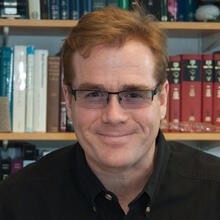
Richard Maas
Department of Medicine (Division of Genetics)
Brigham and Women's Hospital
Harvard Medical School
New Research Building, Room 458H
77 Avenue Louis Pasteur
Boston, MA 02115
Tel: (617) 525-4706
Fax: (617) 525-4751
Email: maas@genetics.med.harvard.edu
11 postdoctoral fellows, 1 graduate student
|
 |
Many organs form via the sequential exchange of inductive signals between interacting tissues, frequently an epithelium and a mesenchyme.
We are identifying the molecular components of the inductive signaling mechanisms that operate between tissues during early mammalian organogenesis. In parallel, we have begun to integrate this genetic and developmental information with tissue engineering and stem cell approaches to generate new organ tissues. The goal is to use analyses of endogenous organ development to deduce “molecular blueprints”- i.e., the genetic and protein based regulatory network by which organs form- to design and engineer organs and organ parts de novo. This is a highly interdisciplinary consortium based project called SysCODE (Systems-based Consortium for Organ Design and Engineering) that involves many HMS, HU and MIT faculty in a team approach to organ building. A variety of rotation projects are available to interested students.
First, we are using laser capture microdissection (LCM) to build comprehensive gene expression lists for embryonic mouse tissues for some of the organs mentioned above. Second, we are employing systems approaches to use this information and proteomic and mutant data to deduce gene regulatory networks (GRNs) for organogenesis. Third, we are collaborating with tissue engineering faculty and the Harvard Stem Cell Institute (HSCI) to design and engineer new mammalian tissues from different types of progenitor cells. Both mouse and human systems are being employed. Students interested in any aspect of this pipeline are welcome.
|
References:
- Alkuraya, F, Saadi I, Lund J, Turbe-Doan A, Morton C, Maas R. SUMO1 Haploinsufficiency Leads to Cleft Lip and Palate. Science 2006; 313:1751.
- Lu W, van Eerde AM, Fan X, Quintero-Rivera F, Kulkarni S, Ferguson HL, Kim H, Fan Y, Xi Q, Li QG, Sanlaville D, Andrews W, Sundaresan V, Bi W, Yan J, Giltay JC, Wijmenga C, de Jong TPV, Feather S, Woolf A, Rao Y,
Lupski JR, Eccles MR, Quade BJ, Gusella JF, Morton CC, Maas RL. Disruption of ROBO2 is associated with urinary tract anomalies and confers risk of vesicoureteral reflux. Am J Hum Genet 2007; 80(4):616-32.
- Lu W, Quintero-Rivera F, Fan Y, Alkuraya F, Donovan DJ, Xi Q, Turbe-Doan A, Li QG, Campbell CG, Shanske AL, Sherr E, Ahmad A, Peters R, Rilliet B, Parvex P, Bassuk AG, Harris DJ, Ferguson H, Kelly C, Walsh C, Gronostajski RM, Higgins A, Ligon AH, Quade BJ, Morton CC, Gusella JF, Maas RL. NFIA haploinsufficiency is associated with a CNS malformation syndrome and urinary tract defects. PLoS Genetics 3(5): e80, Epub May 25, 2007.
- Wang XP, Suomalainen M, Felszeghy S, Zelarayan LC, Alonso MT, Plikus MV, Maas RL, Chuong CM, Schimmang T, Thesleff I. An integrated gene regulatory network controls stem cell proliferation in teeth. PLoS Biology (in press).
|
|