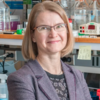
Dennis Kasper

Department of Medicine
Department of Microbiology and Molecular Genetics
Channing Laboratory/Brigham and Women's Hospital
181 Longwood Avenue
Boston, MA 02115
Tel: 617-525-2280
Fax: 617-525-0080
Email: dennis_kasper@hms.harvard.edu
Web Page: The Kasper Lab Page
10 postdoctoral fellows, 2 graduate students
An infection occurs when a potentially virulent organism comes into contact with a susceptible host. Dr. Kasper’s group is studying the molecular basis for bacterial pathogenesis from both the host’s and the organism’s perspective. Studies are aimed at the molecular, chemical, and genetic basis for the interactions of the immune system with bacteria and with important bacterial components, particularly capsular polysaccharides and surface or secreted proteins. How the immune system responds to bacterial antigens, particularly carbohydrates, is a major focus of the laboratory. The overall goal is to develop an understanding of host-organism interactions that will lead to new preventive or therapeutic interventions.
We are studying immune responses to important bacterial molecules, focusing on the elucidation of immune system responses to bacterial colonization and infection. The primary emphasis of this work has been on bacterial carbohydrates, particularly capsular polysaccharides and lipopolysaccharides. One major goal is to understand how commensal bacteria interact with the host and stimulate immune development. We have identified and described symbiotic carbohydrate molecules from the intestinal microflora that play a key role in stimulating organogenesis and in balancing the host's CD4+ T cells so that the immune system responds appropriately to challenge during infection or allergic reactions. These molecules are polysaccharides whose documented stimulation of T cell development runs counter to the earlier immunologic paradigm that carbohydrates are T cell–independent antigens. In fact, these molecules are processed and presented by the MHCII pathway. We are examining the mechanisms by which these polysaccharides stimulate immune development. We are also working on how the commensal flora signal the immune system and the impact of this signaling on immune homeostasis. We have developed insight into how the commensal flora signals the immune system and can immunomodulate autoimmune and infectious diseases. We have been interested in how immune cells interact to induce IL-10 producing regulatory T cells.
Another area of our work deals with Francisella tularensis, which is considered a potential agent of bioterrorism. We have taken a reverse-vaccinology approach to developing a vaccine against this important pathogen. We have cloned and expressed the entire proteome of the organism and have begun to screen the expressed proteins for their ability to induce cellular immunity. Through this ongoing immunologic screening, we will identify proteins that elicit protective immune responses, as assessed by cytokine production, and we will select vaccine candidates for further studies.
References:
- Mazmanian S, Liu C, Tzianabos AO, Kasper DL. An immunomodulatory molecule of symbiotic bacteria directs maturation of the host immune system. Cell 2005;122:107-118
- Wang Q, McLoughlin RM, Cobb BA, Charrel-Dennis M, Zaleski KJ, Golenbock D, Tzianabos AO, Kasper DL. A bacterial carbohydrate links innate and adaptive responses through Toll-like receptor 2. J Exp Med 2006; 203:2853-2863.
- Duan J, Avci FY, Kasper DL. Microbial carbohydrate depolymerization by antigen-presenting cells: Deamination prior to presentation by the MHCII pathway. Proc Natl Acad Sci USA 2008; 105:5183-5188.
- Mazmanian SK, Round JL, Kasper DL. A microbial symbiosis factor prevents intestinal inflammatory disease. Nature 2008;453:620-625.
- Duan J, Chung H, Troy E, Kasper DL. Microbial colonization drives expansion of IL-1 receptor 1 expressing, IL-17 producing g/d T cells . Cell Host & Microbe 2010;7:140-150.
BBS webpage updated 6/14/2010