|
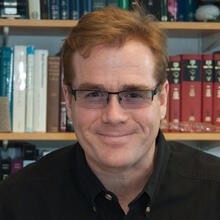
Stephen C. Harrison
Department of Biological Chemistry and Molecular Pharmacology
Department of Pediatrics (HMS)
Harvard Medical School
Seeley G. Mudd Bldg.
250 Longwood Ave.
Boston, MA 02115
Tel: (617) 432-5609
Fax: (617) 432-5600
Howard Hughes Medical Institute
Laboratory of Molecular Medicine
Enders Research Building, Room 678
Children's Hospital
320 Longwood Avenue
Boston, MA 02115
Tel: (617) 355-7372
Fax: (617) 760-1967
Email: schadmin@crystal.harvard.edu
|
 |
We are structural biologists concerned with the organization and dynamics of macromolecular assemblies. We ask the following kinds of questions: (1) How do viruses assemble and get into and out of cells? (2) How do proteins that control transcriptional initiation in mammalian cells integrate the multiple signals that impinge on a complex promoter or enhancer? (3) How do clathrin-coated vesicles assemble, recruit cargo, bud off from their membrane of origin, and uncoat? (4) What is the molecular architecture of a kinetochore and how does this architecture embody its required mechanical and signal-transducing properties?
(1) We are particularly interested in determining the molecular events that accompany penetration of a virus into a cell - a process that takes the form of membrane fusion in the case of enveloped viruses and of membrane perforation in the case of non-enveloped viruses. Crystallographic analyses of viruses and viral proteins are at the core of our efforts to understand these steps. Much of our recent work has focused on the double-strand RNA viruses and in particular on the proteins that carry out the membrane penetration step. Another component of our research seeks to extend our structural understanding of membrane fusion as facilitated by viral fusion proteins and to use the structural information to design screens for fusion inhibitors. (This research includes collaborations with the laboratories of Max Nibert, Dept. of Microbiology and Molecular Genetics, Philip Dormitzer, Dept. of Pediatrics, and the HMS Institute for Chemistry and Cell Biology) (2) We have undertaken a long-term structural dissection of the beta-interferon "enhanceosome", in an effort to understand how the switches that integrate inputs are embodied in the various component transcription factors and how the array of assembled factors can then recruit modifying activities such as those of CBP. (Collaboration with the laboratory of Tom Maniatis, Dept. of Molecular and Cellular Biology, FAS) (3) We are putting together a detailed molecular picture of a clathrin coated vesicle, by combining electron cryomicroscopy with x-ray crystallography. Recent progress includes a 9Å resolution reconstruction of a clathrin coat and a crystal structure of the AP-1 adaptor protein complex. Longer range goals include analysis of dynamics: budding and uncoating. (Collaboration with the laboratories of Tomas Kirchhausen, CBR and Dept. of Cell Biology, and Thomas Walz, Dept. of Cell Biology) (4) The kinetochore of budding yeast is an assembly of at least 50 protein species. Together with the laboratory of Peter Sorger (Systems Biology), we have undertaken to build up a three-dimensional picture of a yeast kinetochore, starting with efforts to crystallize some of its constituent protein complexes.
|
References:
- Modis, Y., Ogata, S., Clements, D. & Harrison, S.C. Structure of the dengue virus envelope glycoprotein after membrane fusion. Nature, 427: 313-319 (2004).
- Chen, B., Vogan, E.M., Gong, H., Skehel, J.J., Wiley, D.C., Harrison, S.C. "Structure of an unliganded simian immunodeficiency virus gp120 core" Nature 433: 834-841 (2005).
- Fotin, A., Cheng, Y., Grigorieff, N., Walz, T., Harrison, S.C., Kirchhausen, T. "Structure of an auxilin-bound clathrin coat and its implications for the mechanism of sorting" Nature 432: 649-653 (2004).
- Miranda, JJ L., DeWulf, P., Sorger, P.K., Harrison, S.C. "The yeast DASH complex forms closed rings on microtubules" Nature Structural & Molecular Biology 12: 138-143 (2005).
|
|