Biological and Biomedical Science
 DMS Home  /  About DMS  /  Current Student Resources  /  Contact Us  /  Search 

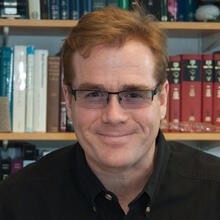
Mason W. Freeman

Lipid Metabolism Unit, Department of Medicine

Center for Computational and Integrative Biology
Massachusetts General Hospital
Richard B. Simches Research Center
185 Cambridge St., CPZN-7214
Boston, MA 02114
Tel: (617) 724-7704
Fax: (617) 643-3328
Email: freeman@molbio.mgh.harvard.edu
Web Page: The Freeman Lab Page
7 postdoctoral fellows

The movement of cholesterol and phospholipids into and out of cells is a highly regulated process that affects a broad range of cellular functions. The receptors and transport proteins that participate in this cellular trafficking of lipids are highly conserved and evolutionarily ancient. My lab interests center on the function of two classes of these proteins, the scavenger receptors and the A class of ABC transporters. The study of these proteins, their signal transduction activities, and the consequences for atherosclerosis plaque formation are central issues that we address. Lipid uptake by macrophages is counterbalanced by an active efflux of lipid out of the same cells that is mediated by the activity of an ABCA class transporter known as ABCA1. The A class of ABC transporters all appear to function as lipid transporters and mutations in the genes encoding several of these proteins lead to devastating human diseases. Our lab has begun to systematically inactivate these proteins in mice using homologous recombination techniques in order to study their function and generate animal models that may be of use in the development of new therapies.

Finally, with our recent move into the newly created Center for Computational and Integrative Biology Center, we are working closely with Brian Seed and his lab group to build a new translational medicine program which is focused on the development of novel therapeutics using combinatorial chemistry and high throughput screening methods. Our goal is to develop new biologics and small molecules that we will take into first-in-human clinical studies to establish that these agents can safely interact with the drug target chosen and produce the physiological change desired to achieve a therapeutic effect. This joint effort with the Seed lab has training opportunities that range from medicinal chemistry through to clinical trial design and execution.


References:

  • Bjorkbacka H, Kunjathoor V, Moore K, Koehn S, Ordija C., Lee MA, Means T, Halmen K, Luster AD, Golenbock DT, and MW Freeman. Reduced atherosclerosis in MyD88-null mice links elevated serum cholesterol to activation of innate immunity signaling pathways. Nature Med 2004;10:416-421
  • Moore KJ, Kunjathoor VV, Koehn SL, Manning JJ, Tseng AA, Silver JM, McKee M and MW Freeman. Loss of scavenger receptor mediated lipid uptake via SR-A or CD36 pathways does not ameliorate atherosclerosis in hyperlipidemic mice. J Clin Invest. 2005;115:2192-2201.
  • Fitzgerald ML, Xavier R, Haley KJ, Welti R, Goss JL, Brown CE, Zhuang DZ, Bell SA, Lu N, McKee M, Seed B, and MW Freeman. ABCA3 inactivation in mice causes respiratory failure, loss of pulmonary surfactant, and depletion of lung phosphatidylglycerol. J Lipid Res. 2007; 48:621-632.